
One Garment, Several Roles, and a Wedding Full of Tartan
At a Scottish wedding, the groom's kilt may be the first one you notice, but rarely the last.
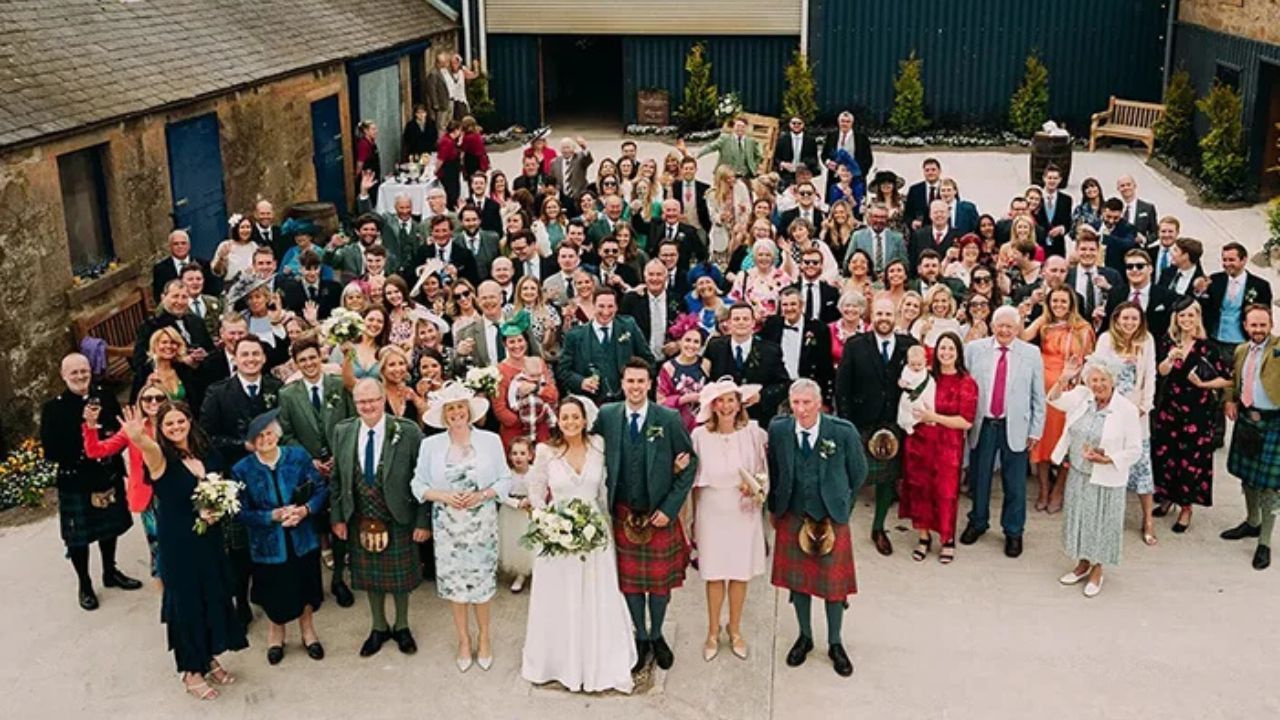
His father may be wearing another tartan. The best man and groomsmen might share the groom's sett, while an uncle arrives in the tartan he has worn to family occasions for thirty years. Another guest chooses Black Watch because he has no clan tartan of his own. By the time everyone gathers for photographs, several different histories can be standing in the same frame.
That is part of what makes Highland dress so effective at weddings.
A conventional suit usually asks the wedding party to coordinate. Kilts can do that too, but tartan allows something else to happen at the same time. People can dress to the same level of formality without necessarily wearing the same pattern.
The result can look unmistakably Scottish without turning the wedding party into a uniform.
Understanding how to achieve that balance begins with the groom, but it certainly does not end with him.
The Groom Sets the Level of Highland Dress
The groom does not necessarily have to wear the most colourful tartan or the greatest number of accessories.
His more important job is to establish the formality of the wedding.
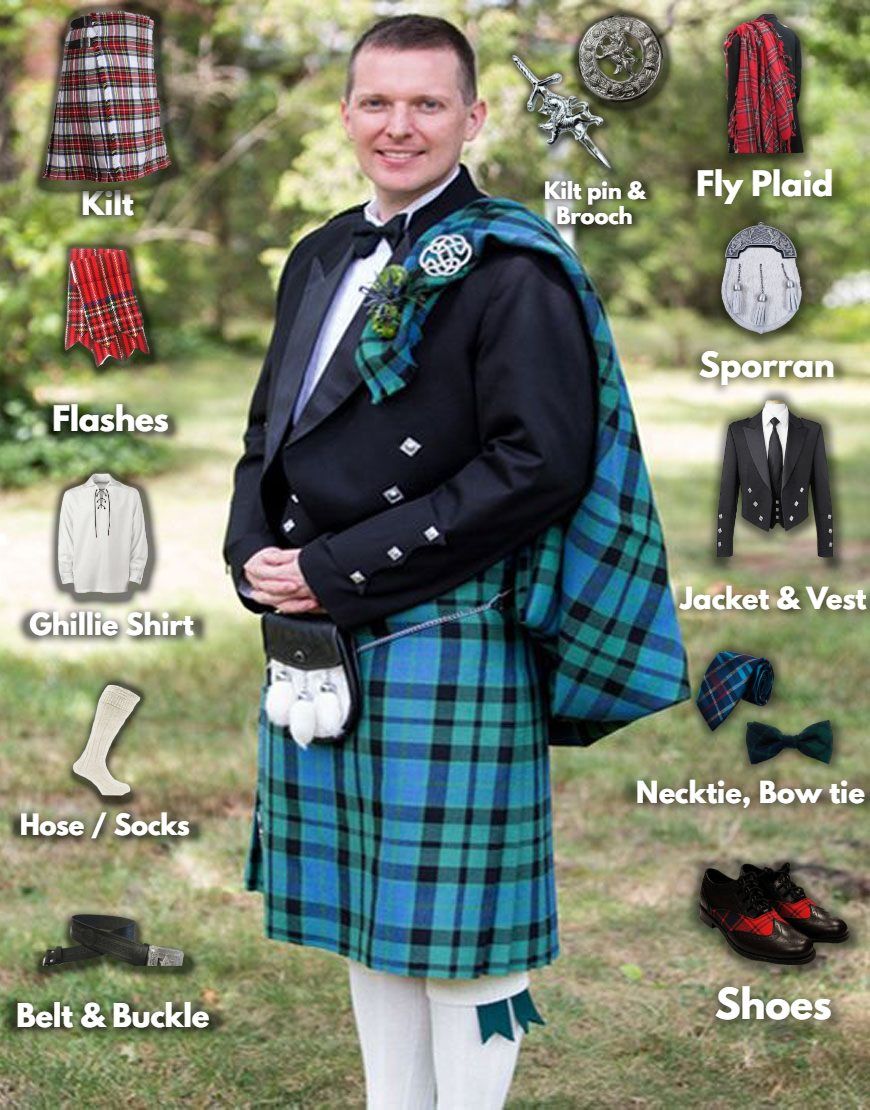
If he chooses a Prince Charlie jacket, waistcoat, dress sporran, formal shirt, bow tie, kilt hose, and polished shoes, he has set a fairly formal Highland standard. If he chooses an Argyll jacket and tie, the atmosphere becomes slightly more flexible. A tweed jacket, tartan kilt, and leather day or semi-dress sporran move the clothing towards a country wedding.
All can be appropriate.
The venue and time of day should help determine which makes sense.
A formal evening reception in a historic hotel or castle can comfortably support a Formal Prince Charlie Kilt Outfit Package. A daytime ceremony or outdoor wedding may suit an Argyll combination far better.
The groom should look distinct, but he should also look as though he belongs at his own wedding.
The Tartan Can Carry Family Into the Ceremony
For a groom with a documented clan connection, the tartan may be the most personal element of the entire outfit.
It can connect a wedding taking place today with a family name, place, or tradition inherited from earlier generations.
That does not mean every clan tartan is ancient in its present form.
Tartan weaving has a long Scottish history, but the highly organised system associating particular named patterns with particular clans developed substantially during the late eighteenth and nineteenth centuries. Some tartans have older histories than others, and the stories surrounding them deserve to be checked rather than romanticised.
None of this makes clan tartans less meaningful at a wedding.
It makes knowing what you are wearing more meaningful.
Before choosing from a collection of traditional tartan kilts, spend some time researching the family connection rather than relying solely on a surname-matching website.
If the tartan genuinely belongs in your family story, a wedding is a fine place to bring it forward.
The Bride Does Not Have to Wear the Groom's Tartan
Scottish wedding styling can become excessive surprisingly quickly.
Once a tartan has been selected, there is a temptation to put it everywhere.
The groom wears it.
The groomsmen wear it.
Then come the ties, ribbons, bouquets, chair decorations, invitations, table runners, cake details, and perhaps tartan wrapped around anything that remained stationary for long enough.
Restraint usually produces a better result.
The bride or partner can acknowledge the groom's tartan through a sash, ribbon, shawl, bouquet detail, or another small element without turning the entire outfit into matching fabric.
The same principle applies to the venue.
Tartan is visually powerful.
A traditional kilt already gives you several yards of it.
Let it breathe.
What Should the Groomsmen Wear?
Matching does not have to mean identical
There are several good ways to organise a kilted wedding party.
The simplest is to place the groom and groomsmen in the same tartan and jacket. The groom can then be distinguished through his waistcoat, boutonnière, tie, fly plaid, sporran, or another small detail.
This creates very clean photographs.
Another approach is to give the groom his family tartan while putting the groomsmen in a universal or neutral sett.
This can be particularly useful when the wedding party includes friends from different backgrounds who have no genuine reason to wear the groom's clan tartan.
A third option is to let each man wear his own family tartan while coordinating the jackets, shirts, hose, and level of formality.
That produces more variation, but at a Scottish wedding the effect can be wonderful.
The wedding party remains visually connected through the structure of Highland dress rather than through identical cloth.
Fathers Have More Freedom Than Groomsmen
The fathers of the couple occupy an interesting position.
They are part of the wedding party, but they are not groomsmen.
That means there is usually no need to put them into exactly the same tartan as everyone else.
If the groom's father already owns a family kilt, wearing it can add considerably more character to the wedding than hiring another matching outfit simply for visual consistency.
The same applies to the bride's father.
Where there is a genuine family tartan, he may choose to represent his own side of the family.
This can create one of the best visual features of a Scottish wedding: different tartans appearing together without looking disorganised.
Keep the formality consistent and the fabrics can vary.
The Best Man Can Match or Stand Apart
The best man is close enough to the groom that some distinction can work.
If all the men are wearing the same tartan, a different waistcoat or boutonnière may be enough.
If the groom wears a fly plaid, the best man can omit it.
If the groom's sporran is more formal, the best man can use a slightly quieter design.
There is rarely a need to create an entirely different outfit.
The best man will spend much of the ceremony and photography beside the groom, so the two outfits should relate naturally.
Think hierarchy rather than contrast.
The groom should lead the clothing.
The best man should support it.
Guests Can Wear Their Own Tartans
A Scottish wedding becomes more interesting when every kilt is not the same
Male guests wearing kilts generally do not need to match the wedding party unless specifically requested.
In fact, a room containing several tartans can create a richer sense of occasion.
One guest might arrive in MacKenzie.
Another in Buchanan.
Someone else in Fraser.
A guest with military associations may choose Black Watch.
Another person may wear a universal tartan because there is no clan connection to claim.
This is where browsing kilts for men can be useful. The modern kilt wardrobe extends far beyond a single wedding sett, and guests have far more freedom than members of the formal wedding party.
 Brown Hybrid Utility Kilt for Men – Grey Tartan Pleats & Adjustable FitSpecial Price $159.00 Regular Price $200.00
 Gordon Dress Modern Tartan kilt - KiltistSpecial Price $99.00 Regular Price $214.00


The important rule is not to deliberately imitate the groom if his outfit contains details clearly intended to distinguish him.
It is his wedding.
Let him have the fly plaid.
What If a Guest Is Not Scottish?
Wear the kilt respectfully.
Scottish ancestry is not a prerequisite for appreciating Highland dress, and many tartans are not restricted to clans.
A guest without a genuine clan connection can choose a universal, district, military, or other appropriate tartan rather than inventing ancestry.
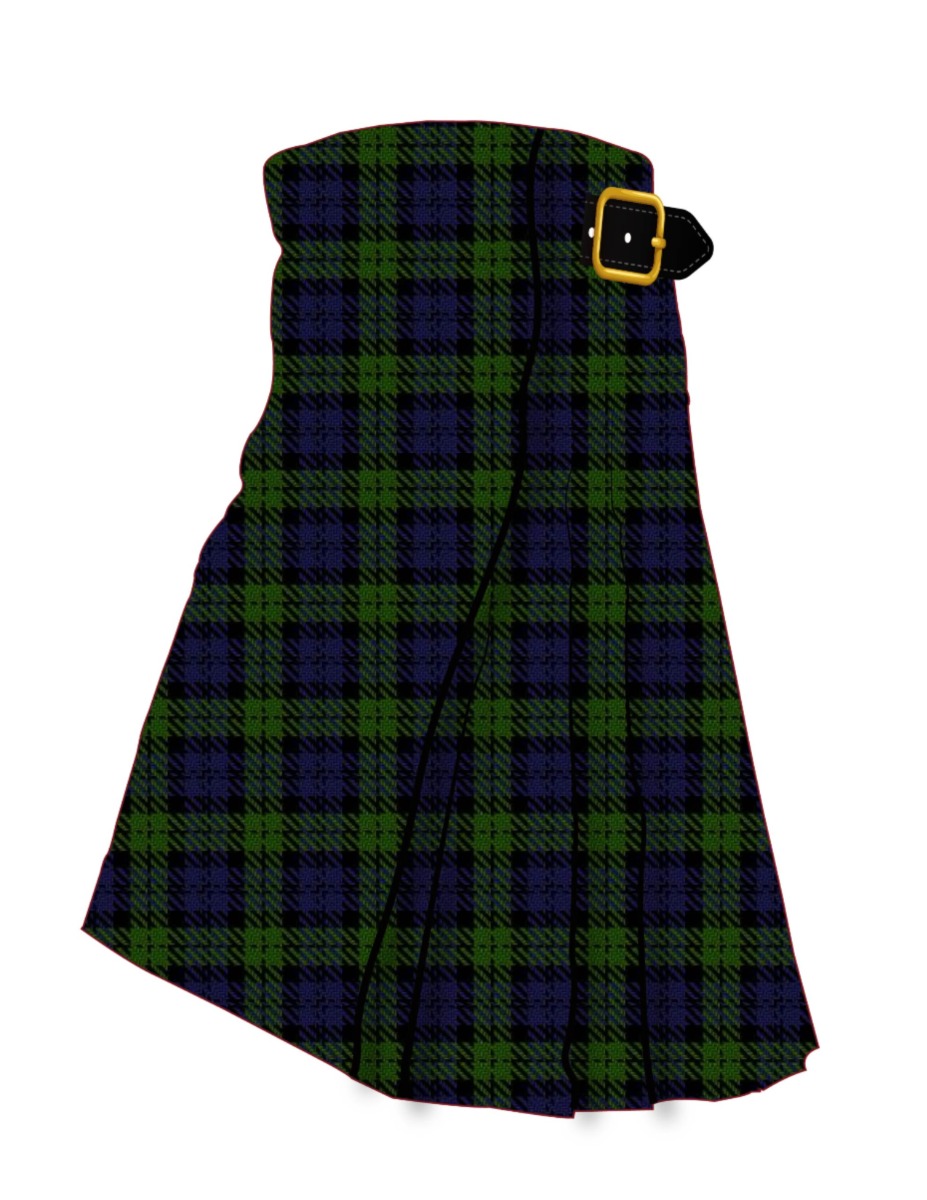
Black Watch is one of the easiest traditional choices because of its restrained green and navy sett. The Black Watch Smallest Sett Tartan Kilt can move easily between weddings, Burns suppers, Highland gatherings, dinners, and less formal occasions.
What matters is understanding that the garment has a history.
Wear it properly.
Learn what the tartan represents.
Do not attach yourself to a clan merely because an online search produced a convenient surname.
Respect is generally much simpler than people make it.
Prince Charlie Is Not the Only Wedding Jacket
The Prince Charlie jacket has become so closely associated with Scottish weddings that newcomers sometimes assume anything else is incorrect.
It is not.
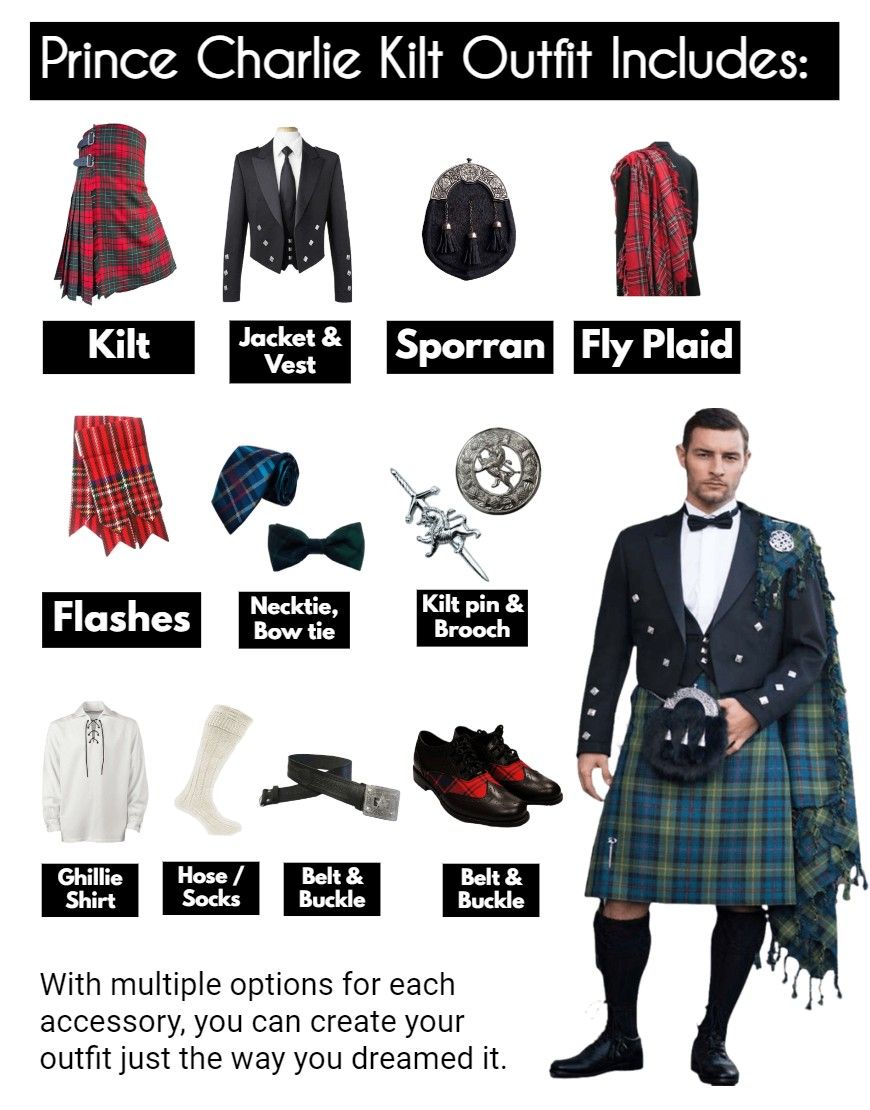
Prince Charlie is an excellent choice for formal Highland evening dress. Its short front, tails, decorative buttons, and waistcoat give it a distinctly ceremonial appearance.
A Classic Tartan Prince Charlie Kilt Outfit suits a groom who wants the wedding to lean strongly into traditional formal Highland styling.
Argyll is different.
It is less rigidly formal and therefore easier to use at daytime ceremonies, outdoor weddings, and receptions where the dress code sits somewhere between formal and relaxed.
A Black Argyll Men's Scottish Kilt Outfit provides a classic darker option, while the Light Grey Argyll Jacket Kilt Outfit Package works particularly well when the couple wants a softer palette.
Then there is tweed.
For a rural estate, barn, garden, or autumn wedding, a tweed jacket can look superb over tartan.
The correct jacket is the one that understands the wedding around it.
Daytime and Evening Highland Dress Are Different Conversations
A noon ceremony followed by photographs on a country estate has different clothing demands from a formal evening reception.
For daytime, an Argyll or tweed jacket can feel natural. A necktie works comfortably. A semi-dress sporran is sufficient. Brown leather may also fit the palette depending on the tartan.
As evening formality increases, darker jackets, dress sporrans, bow ties, and more polished footwear become easier to justify.
This does not mean everyone must change clothes halfway through the wedding.
Most guests will not.
It simply explains why two Scottish wedding outfits can look quite different while both remaining appropriate.
Highland dress has levels of formality just as conventional menswear does.
A tuxedo and tweed jacket are both jackets.
Nobody expects them to perform the same job.
A Sporran Tells You More About the Outfit Than You Think
The Scottish sporran solves the obvious practical problem created by a traditional kilt's lack of trouser pockets.
But it also contributes strongly to formality.
 Natural Calfskin Grey Antique Thistle Cantle SporranSpecial Price $99.00 Regular Price $249.00


A simple leather day sporran belongs naturally with relaxed Highland dress.
Semi-dress designs provide a useful middle ground for weddings.
Full dress sporrans, often with more elaborate cantles and decorative fronts, belong more comfortably with formal Prince Charlie outfits.
The groom may choose the most formal sporran in the wedding party while the groomsmen wear quieter versions.
Guests can follow the same logic.
Match the sporran to what you are actually wearing rather than choosing the most elaborate one in the shop.
Wedding Kilts Need to Fit Properly
A wedding kilt will be photographed relentlessly.
Standing.
Sitting.
Walking.
Dancing.
From the front.
From the side.
And, because the pleats are one of the finest parts of a well-made kilt, from the back.
Fit matters.
The kilt should normally sit around the natural waist, above where many modern trousers are worn. The front aprons need to lie flat. The pleats should fall cleanly rather than being stretched open across the seat.
The traditional hem sits around the middle of the knee.
Never order using jeans size alone.
A made-to-measure Scottish Wedding Kilt Outfit should be based on actual waist, hip, and length measurements, with separate jacket measurements where required.
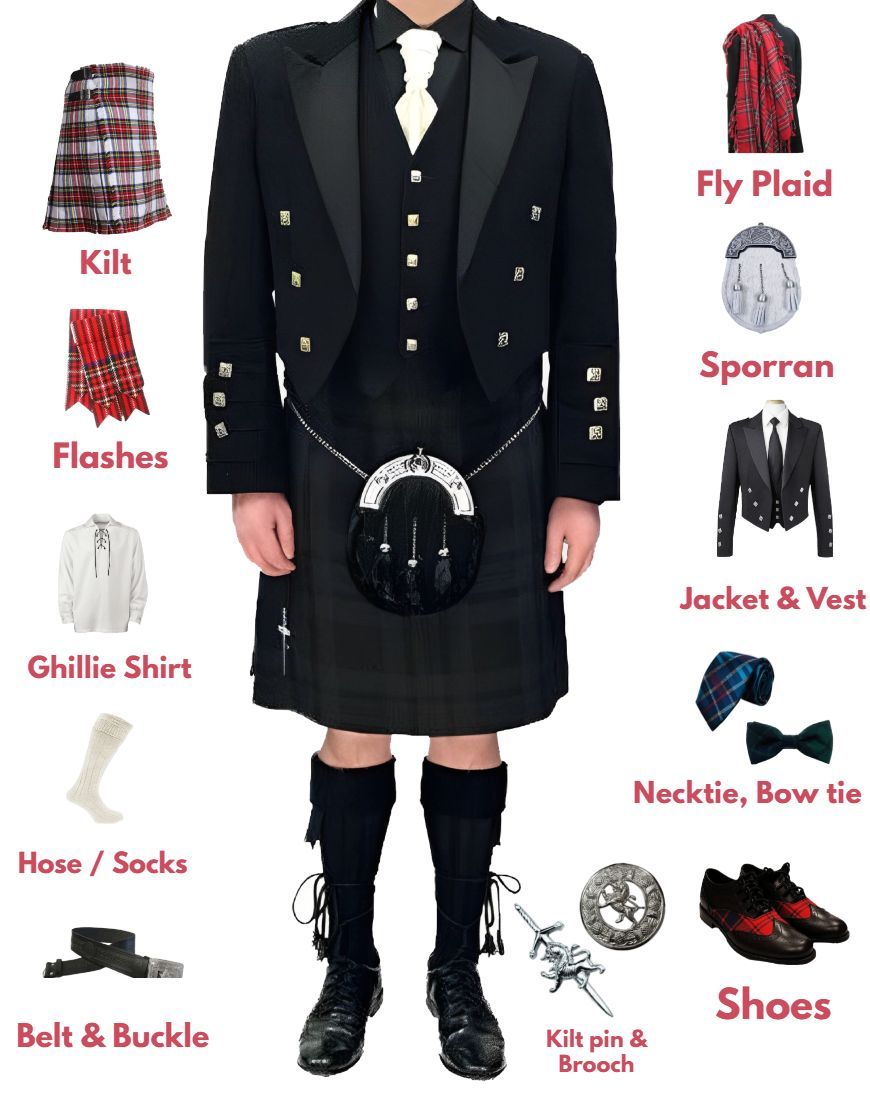
For groomsmen, collect each man's measurements individually.
Six men who all claim to wear a 34-inch trouser waist may require six different kilts.
Hose Should Support the Tartan, Not Fight It
Kilt hose occupy enough visual space to influence the entire outfit.
Cream and off-white remain popular wedding choices because they work with an enormous number of tartans.
But they are not compulsory.
Charcoal hose can look excellent with dark tartans.
Navy can work with blue-heavy setts.
Green can be effective when carefully matched.
Flashes provide a smaller opportunity to repeat one of the tartan colours. If the kilt contains a fine red line, for example, restrained red flashes can connect the lower half of the outfit without making it look over-coordinated.
For a wedding party, matching hose and flashes can also provide consistency when different tartans are being worn.
That is often more elegant than forcing everyone into one sett.
Ghillie Brogues, Ordinary Brogues, or Boots?
Traditional ghillie brogues are an obvious wedding choice.
Their long laces and distinctive construction work naturally with formal Highland dress. A pair such as the Brown Leather Ghillie Brogues can be especially effective with lighter jackets, tweed, and earthy tartans.
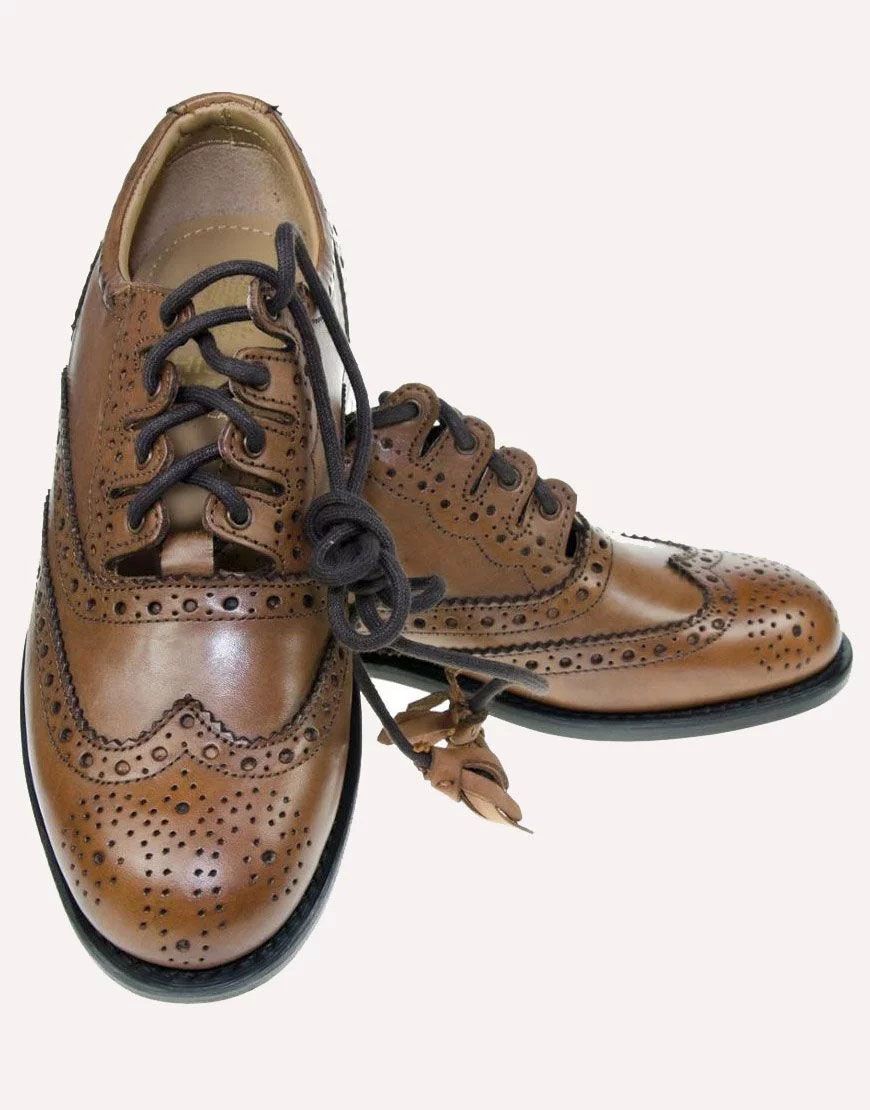
Black footwear generally sits more easily beneath formal black Prince Charlie dress.
Ordinary leather brogues are perfectly acceptable too.
For outdoor weddings, boots can make more sense than either option.
Imagine an October ceremony on wet grass.
Tradition will not make polished soles grip mud.
Choose footwear for the wedding you are actually attending.
And whatever you buy, wear it beforehand.
The ceilidh will expose new shoes mercilessly.
The Kilt Belt Is Optional More Often Than People Realise
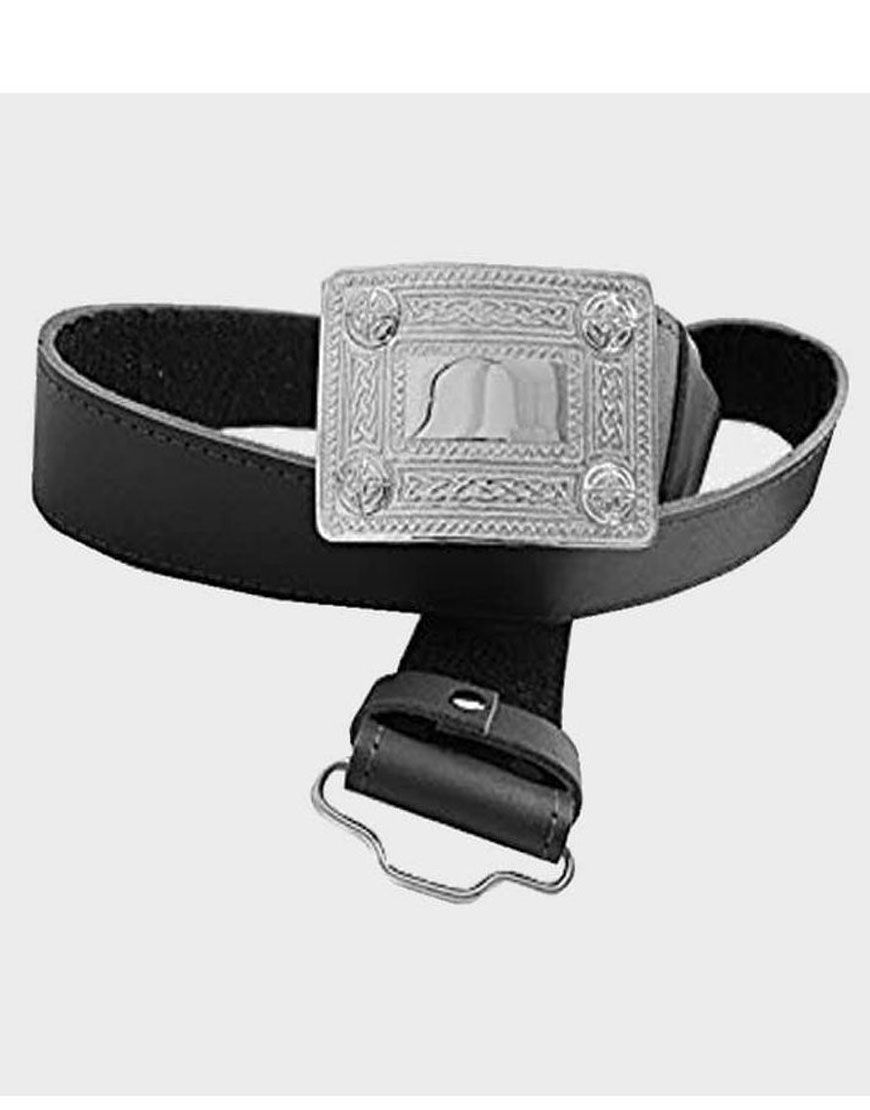
A large leather kilt belt and decorative buckle can look excellent.
That does not mean every wedding outfit needs one.
When a waistcoat is worn, the belt may be unnecessary and can crowd the waist visually. The kilt already has its own fastening system.
Belts work particularly well with jacketless outfits or more relaxed combinations.
If you do use one, keep it consistent with the other leather pieces. A simple Black Plain Leather Kilt Belt With Buckle can provide definition without turning the buckle into the centre of the wedding photographs.
Accessories should finish the outfit.
They should not compete for leadership.
A Fly Plaid Is One Way to Mark the Groom
Few Highland accessories create as much visual impact as a fly plaid.
Worn over the shoulder and secured with a brooch, usually in tartan matching the kilt, it can make the groom immediately distinguishable.
That makes it useful when the groom and groomsmen otherwise wear matching outfits.
But it is not compulsory.
Nor does every member of the wedding party need one.
Used selectively, the fly plaid creates hierarchy.
Used everywhere, it can make a wedding party look more ceremonial than intended.
For a formal Scottish wedding, it can be magnificent.
For a relaxed summer garden ceremony, the groom may be happier without several additional feet of cloth over his shoulder.
The Sgian Dubh Requires a Little Modern Common Sense
The sgian dubh traditionally sits inside the kilt hose with the upper portion visible.
It remains familiar in formal Highland dress, particularly at weddings.
Modern venues, however, may have policies regarding blades or weapons. Laws and security arrangements can also vary according to location.
Check before the wedding.
If a real sgian dubh creates an issue, a non-bladed or decorative alternative can preserve the appearance without causing problems.
Tradition works best when accompanied by common sense.
The groom has enough to deal with on his wedding morning without negotiating venue security over his sock.
Women Can Bring Tartan Into the Wedding Without Wearing a Kilt
The kilt may dominate men's Highland wedding dress, but tartan can appear throughout the wedding party in subtler ways.
A tartan sash is one of the most recognisable options.
Shawls and wraps can work beautifully at autumn and winter weddings.
A small tartan element in a bouquet, handbag, hair accessory, or other detail can acknowledge a family sett without overwhelming the dress.
This also allows both sides of the family to be represented.
The groom may wear one tartan while the bride incorporates another family connection elsewhere.
There is no rule requiring a Scottish wedding to have only one tartan.
Families are rarely that simple.
Children Can Wear Highland Dress Too
A young ring bearer or page boy in a small kilt can be one of the most memorable members of the wedding party.
But comfort matters.
Children do not care that an accessory is historically correct if it scratches, pinches, slips, or stops them running.
Keep their outfits lighter.
A kilt, shirt, hose, and simple footwear may be enough. A waistcoat can add formality without requiring a full heavy jacket.
And take accurate measurements close enough to the wedding date to account for growth.
Adults occasionally change size before a wedding.
Children treat it as a competitive sport.
The Ceilidh Is Where Every Clothing Decision Gets Tested
The ceremony tests appearance.
The ceilidh tests engineering.
Once Scottish country dancing begins, a badly fitted kilt becomes obvious very quickly.
The waistband must remain secure.
Pleats need room to move.
Shoes must be comfortable.
Hose should stay where they belong.
Overly elaborate accessories suddenly become less attractive once everyone is moving.
This is another reason a kilt works so well for a Scottish wedding.
It is formal clothing that can actually participate in the celebration.
A well-made kilt should not merely survive the dance floor.
It should look better in motion.
Different Tartans Can Make the Family Photograph Better
Modern weddings often pursue perfect visual matching.
Scottish weddings have another option.
Imagine the groom in his clan tartan.
His father wears another version of the family sett.
The bride's father wears a tartan connected with his family.
An uncle arrives in Black Watch.
A friend wears a universal tartan.
The jackets are broadly consistent. The formality matches. The hose and footwear do not clash.
Yet the tartans differ.
Instead of ruining the photograph, those differences can give it depth.
Each pattern has arrived by a different route.
That is far more interesting than making everyone look identical simply because wedding styling demands symmetry.
Guests Should Never Try to Outdress the Groom
This principle is not uniquely Scottish.
But Highland dress provides several opportunities to accidentally break it.
If the groom is wearing a simple Argyll outfit, a guest probably does not need to arrive in the most elaborate possible combination of fly plaid, highly decorated dress sporran, ceremonial accessories, and conspicuous tartan.
You can dress well without turning yourself into the centrepiece.
If the invitation specifies Highland dress, follow the requested level of formality.
If it simply says formal, a kilt outfit can be an excellent interpretation.
If you are uncertain about a very distinctive clan or ceremonial accessory, ask.
Good wedding etiquette survives perfectly well beneath tartan.
The Best Wedding Kilt Has a Life After the Wedding
The groom's outfit receives enormous attention for one day.
The marriage, hopefully, lasts rather longer.
The kilt should too.
A good tartan kilt can return for anniversaries, Burns suppers, formal dinners, Highland Games, Hogmanay celebrations, other weddings, family gatherings, and ceilidhs.
A guest who buys a kilt for one Scottish wedding can do the same.
That is why versatile tartans and good construction matter.
The garment gradually stops being "the kilt I bought for John's wedding."
It becomes your kilt.
Years later, the first wedding remains part of its history.
But it will not be the whole story.
From Groom to Guest, the Rules Are Simpler Than They Look
A traditional Scottish wedding can involve a surprising number of garments and accessories, but the underlying logic is straightforward.
The groom sets the level of formality.
The groomsmen coordinate without necessarily becoming identical.
Fathers and family members can wear meaningful tartans of their own.
Guests have greater freedom, provided they respect the dress code and do not compete with the wedding party.
The tartan should have an honest reason for being worn.
The jacket should suit the occasion.
The sporran should match the jacket's level of formality.
The kilt must fit properly.
Everything else is refinement.
Once those foundations are right, there is very little need to decorate the outfit simply for the sake of making it look more Scottish.
The tartan has already done that.
Final Thoughts
Kilts define a traditional Scottish wedding because they allow ceremony and individuality to exist together.
The groom can wear a family tartan without requiring every guest to copy it. Groomsmen can coordinate through jackets and accessories while fathers arrive in tartans carrying their own histories. Guests can wear clan, district, military, or universal setts and still look entirely at home in the same room.
That variety is not a flaw in Highland dress.
It is one of its strengths.
Choose the tartans carefully. Keep genuine family connections genuine. Match the level of formality to the wedding rather than automatically reaching for every ceremonial accessory available.
Most importantly, make sure the kilts fit well enough to survive what happens after the photographs.
Because eventually the speeches finish.
The jackets come off.
The music starts.
And the wedding moves from ceremony to celebration.
That is when a Scottish kilt stops being something worn for tradition and becomes part of the day itself.