
Getting the Tartan, Jacket, Fit, and Formal Details Right
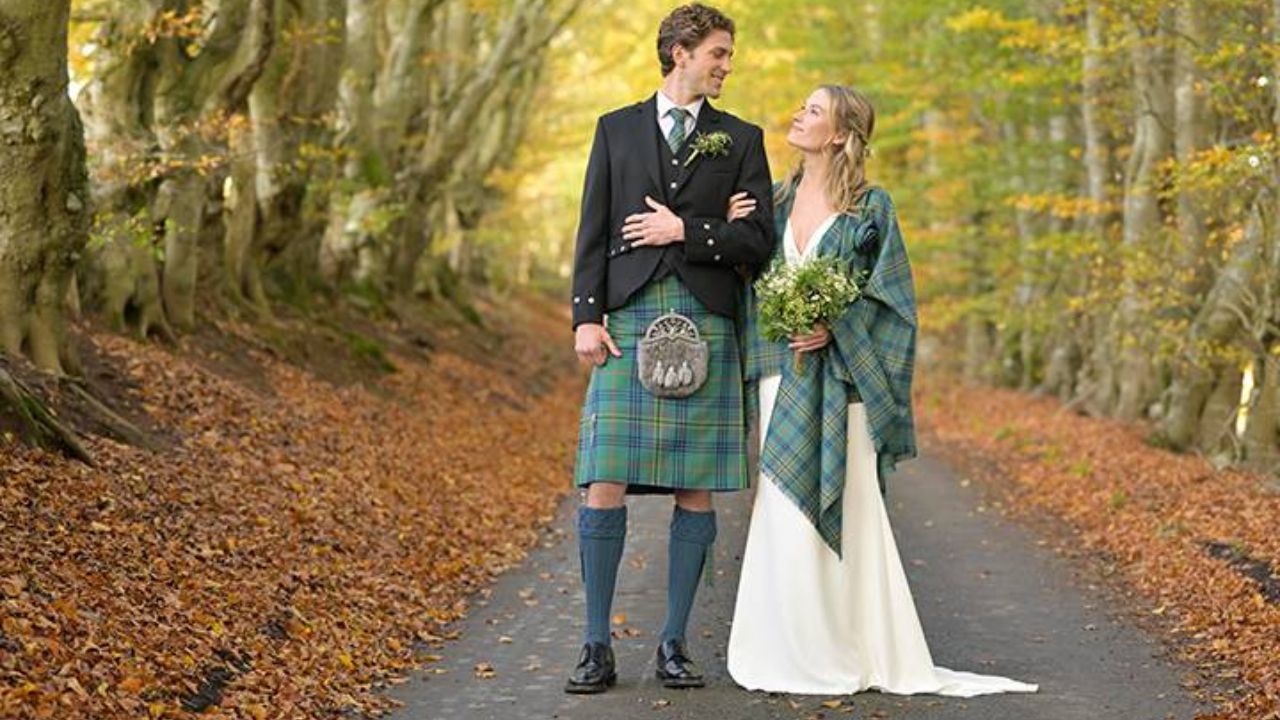
A Scottish wedding gives the kilt one of its finest settings.
It can carry a family tartan into the ceremony, distinguish the groom without separating him completely from his groomsmen, and move comfortably from photographs and formal vows into dinner and ceilidh dancing later in the evening. Done well, Highland wedding dress feels formal without becoming stiff.
The difficulty is that there is no single "Scottish wedding outfit."
A groom marrying in a castle may want a Prince Charlie jacket, waistcoat, dress sporran, and carefully coordinated accessories. A summer ceremony in the countryside may suit a lighter Argyll jacket. Another groom may care far more about wearing his family's tartan than following the most formal version of Highland evening dress.
The right choice begins with the wedding itself.
Before deciding on a tartan, ask three questions: how formal is the ceremony, what genuine family or regional connections do you want the clothing to represent, and how much of the outfit do you expect to wear again?
Those answers make almost every decision that follows easier.
Start With the Tartan, Not the Accessories
The kilt is the visual centre of Highland wedding dress.
Jackets, waistcoats, sporrans, hose, ties, flashes, shoes, and other details matter, but all of them are being built around the tartan. Choosing accessories first is rather like choosing a picture frame before deciding what goes inside it.
For many Scottish families, the obvious starting point is a clan tartan.
If the groom has a documented connection with MacDonald, Campbell, Fraser, Gordon, MacKenzie, Buchanan, or another clan tradition, wearing the associated tartan can make the wedding clothing genuinely personal.
But do a little research before ordering.
The modern relationship between clans and named tartans is more complicated than the popular idea that every Scottish family has worn one unchanged pattern for centuries. Tartan is old, but many of today's formal clan associations developed or became standardised particularly during the late eighteenth and nineteenth centuries.
That does not diminish their significance. It simply means the real history is worth knowing.
Kiltist's collection of traditional tartan kilts gives couples a useful place to compare different setts before deciding how the rest of the wedding outfit should develop.
 Harvey Tartan Kilt for MenSpecial Price $299.00 Regular Price $515.00
 Brodie Dress Tartan KiltSpecial Price $250.00 Regular Price $515.00
 Brodie Country fare (Corporate) Tartan KiltSpecial Price $250.00 Regular Price $515.00
 Brodie (WCWM) Tartan KiltSpecial Price $250.00 Regular Price $515.00
 Brodie (W & A Smith) Tartan KiltSpecial Price $250.00 Regular Price $515.00


What If the Groom Has No Clan Tartan?
You do not need to invent Scottish ancestry to wear Highland dress
Not every groom wearing a kilt has a clan connection.
Nor does he need one.
Scottish tartan includes district, military, universal, commemorative, organisational, and contemporary designs alongside clan patterns. A groom can therefore choose a tartan because it represents a place, has a meaningful history, or simply works beautifully with the wedding.
The important thing is not to manufacture a family connection that does not exist.
Universal tartans are particularly useful in mixed wedding parties because they can be worn without implying that every groomsman suddenly belongs to the groom's clan.
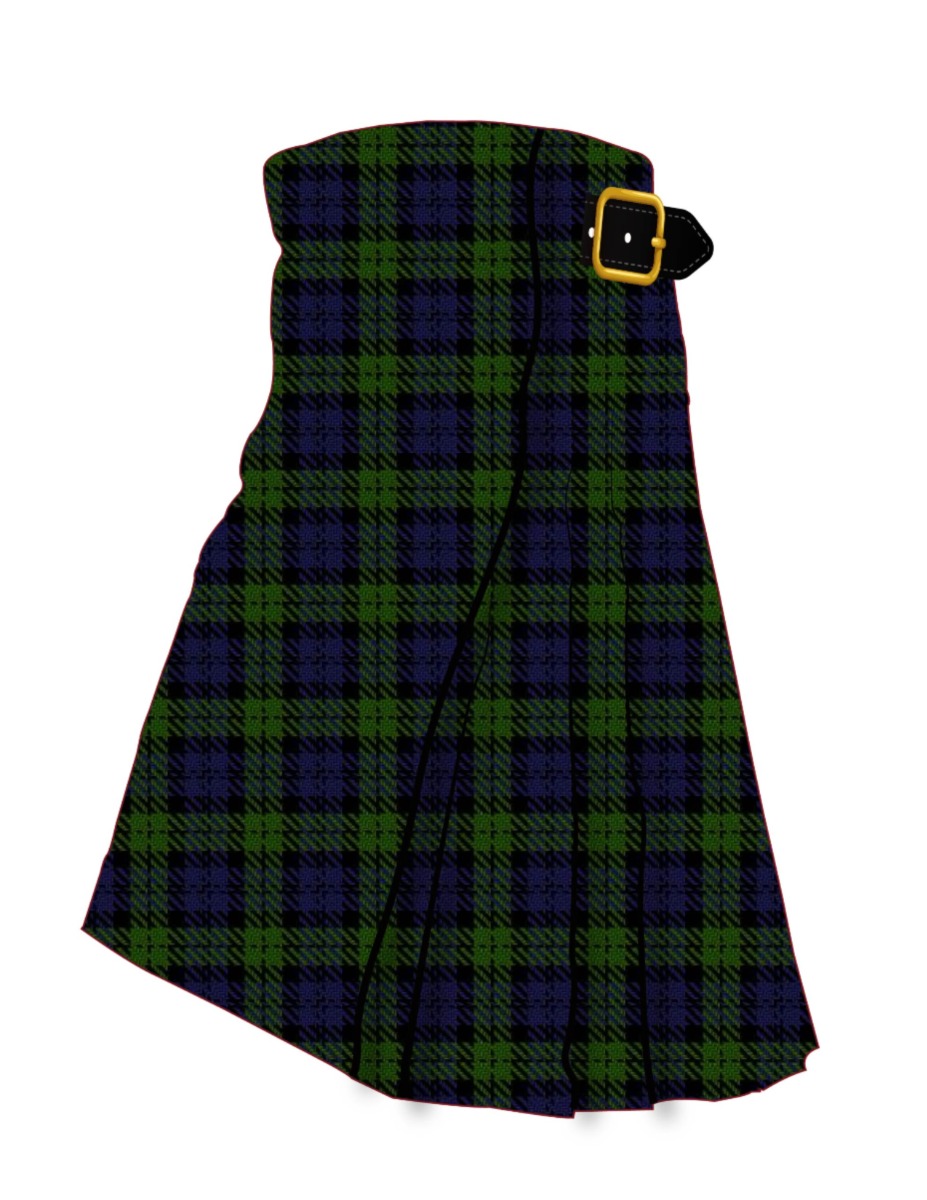
Black Watch is another popular direction because its deep green and navy palette works comfortably with black, charcoal, navy, grey, and many natural wedding colours. A Black Watch Smallest Sett Tartan Kilt can also be worn long after the wedding, which matters if you want the kilt to become part of your wardrobe rather than a one-day purchase.
Should the Groom and Groomsmen Wear the Same Tartan?
They can, but they do not have to.
Matching kilts create a strong, coordinated wedding party and make photographs particularly clean. This approach works well when the chosen tartan represents the groom's family or has been selected as the common wedding tartan.
Another option is to let the groom wear his family tartan while the groomsmen wear a universal or complementary sett.
You can also keep all the kilts identical while distinguishing the groom through the jacket, waistcoat, tie, boutonnière, sporran, or another restrained detail.
This is usually more effective than trying to make every component different.
The groom should be recognisable.
He does not need to look as though he belongs to an entirely separate wedding.
The Fit of the Kilt Matters More Than Almost Anything Else
Wedding photographs have a long life.
A kilt that sits badly will still be sitting badly when someone opens the album twenty years from now.
Traditional kilt sizing differs from ordinary trousers. The waistband is generally worn around the natural waist, higher than modern jeans. The front aprons should lie flat, while the pleated section falls cleanly across the rear.
Length traditionally reaches around the middle of the knee when standing.
The hip measurement is especially important. If the kilt is too tight through the seat, the pleats begin opening and pulling. If it is excessively loose, the structured silhouette disappears.
This is why you should never order a made-to-measure wedding kilt using jeans size alone.
Measure the actual waist where the kilt will sit. Measure the widest point of the seat or hips. Take the length while standing naturally.
For a wedding, it is worth measuring twice.
Traditional Wool or a Wool-Blend Kilt?
Think beyond how the fabric looks on the product page
Pure wool remains the classic material for a traditional Scottish kilt.
It drapes beautifully, holds pleats well, and has the weight and movement most closely associated with traditional Highland tailoring. For a groom who wants a kilt intended to last through weddings, Burns suppers, formal dinners, clan gatherings, and other occasions, good wool is difficult to beat.
Wool blends can offer a more economical alternative and may be practical for larger wedding parties where several matching kilts are required.
The choice depends partly on the role.
A groom investing in his own family tartan may reasonably spend more on the cloth and construction.
For ten groomsmen who may wear their kilts only occasionally, the calculation can be different.
What matters is that the fabric has enough body to hold the pleats properly and does not look thin under formal tailoring.
Prince Charlie or Argyll?
This is the decision that defines the rest of the outfit
Once the tartan and fit are settled, the jacket determines the level of formality.
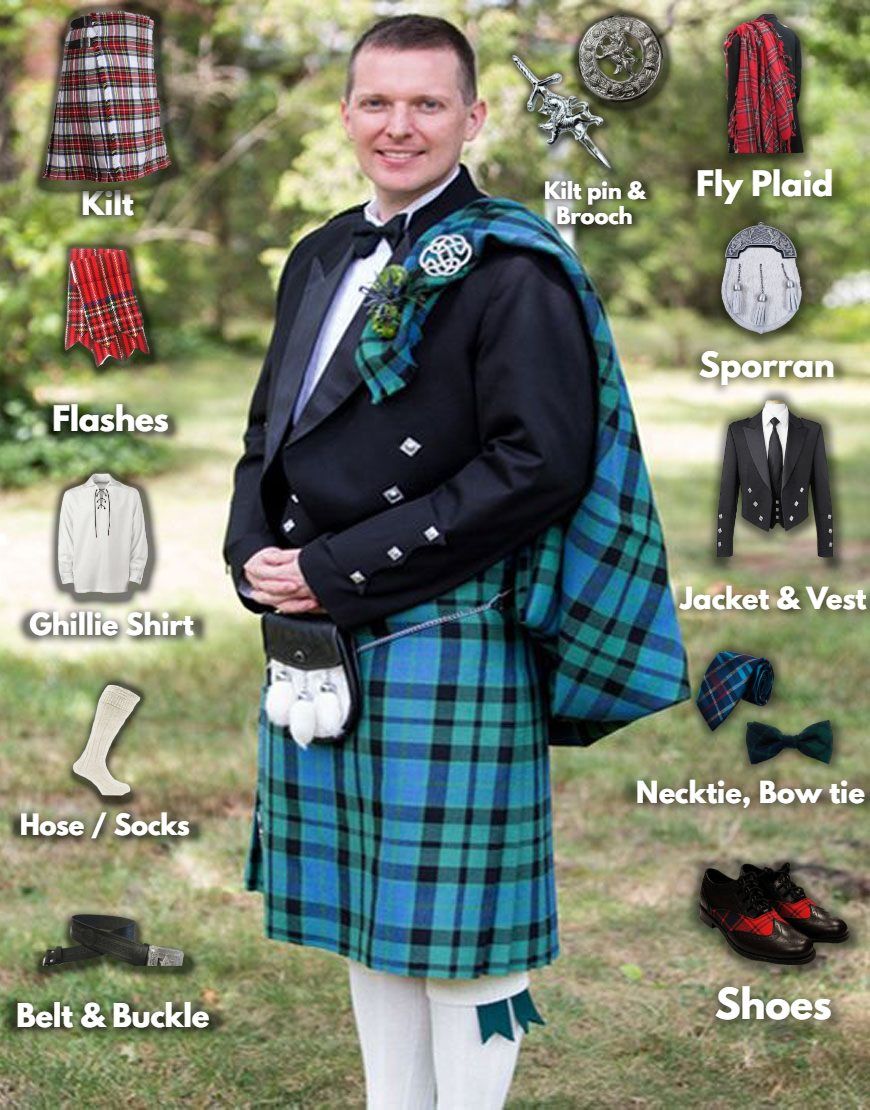
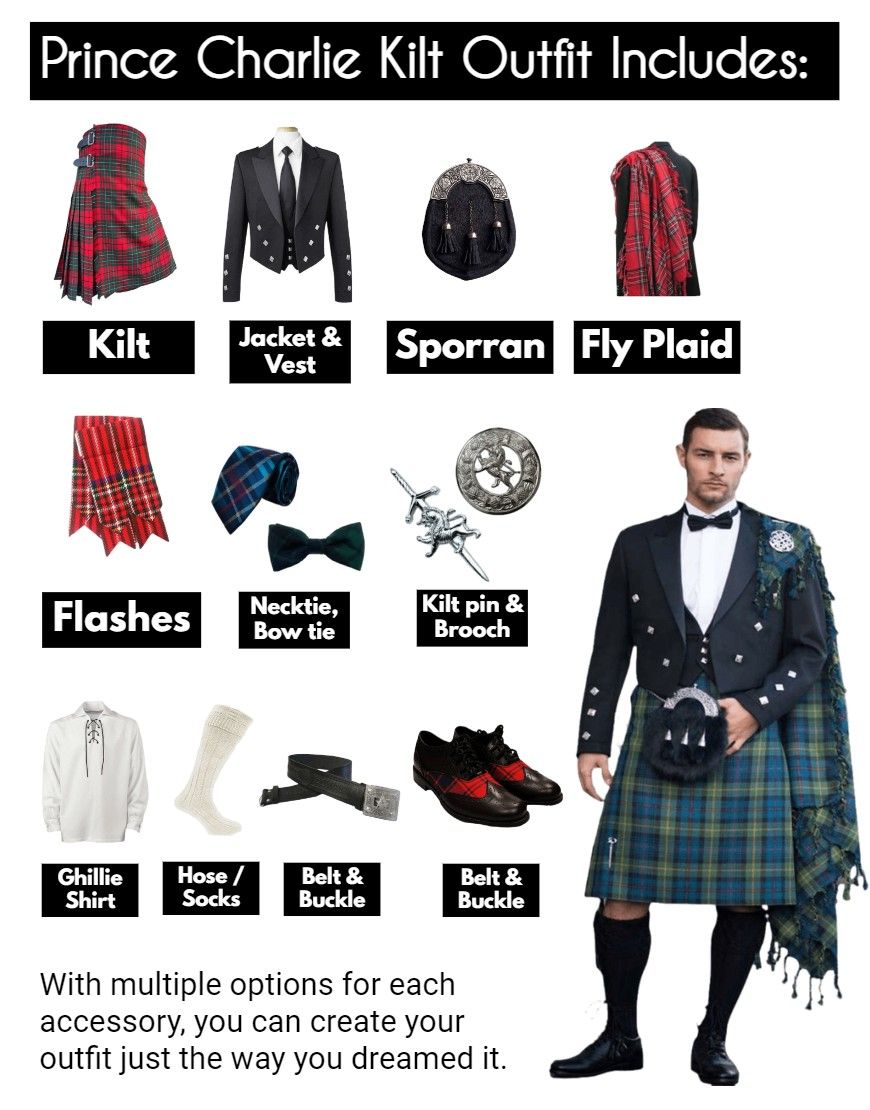
The Prince Charlie jacket is the classic choice for formal Highland evening dress. Its short cut, decorative buttons, tails, and accompanying waistcoat create the unmistakable silhouette seen at Scottish weddings, dinners, ceilidhs, and other formal celebrations.
For a traditional evening wedding or a ceremony where the groom wants full Highland formality, a Formal Prince Charlie Kilt Outfit Package provides the clearest direction.
Argyll is more flexible.
An Argyll jacket can work during the day and continue comfortably into the evening. Its styling is less ceremonial, which makes it particularly suitable for country weddings, daytime ceremonies, outdoor venues, and couples who want Highland dress without going to the most formal level.
A Black Argyll Men's Scottish Kilt Outfit keeps things traditional and versatile, while a Light Grey Argyll Jacket Kilt Outfit Package can work particularly well for spring and summer weddings.
Neither jacket is inherently "more Scottish."
They simply belong to different levels of formality.
When Prince Charlie Is the Right Choice
Imagine an evening ceremony in a historic hotel, castle, manor house, or formal wedding venue.
The groom is wearing a tartan kilt with a crisp white shirt. The Prince Charlie jacket and waistcoat create the formal upper half. A bow tie, dress sporran, kilt hose, flashes, and polished brogues complete the outfit.
Everything speaks the same formal language.
This is where Prince Charlie works beautifully.
Problems begin when individual pieces are taken from that formal outfit and mixed randomly with casual clothing.
A highly ornate dress sporran beneath a casual shirt can feel disconnected. A Prince Charlie jacket with rugged boots may create the same problem unless there is a deliberate stylistic reason behind it.
If you choose Prince Charlie, commit to the level of dress.
The Classic Tartan Prince Charlie Kilt Outfit is a useful example of how the pieces can be assembled as one coherent formal outfit rather than treated as unrelated Scottish accessories.
Why Argyll Is Often the More Useful Wedding Jacket
A wedding lasts one day.
A good Highland outfit should ideally last much longer.
This is where Argyll has an advantage.
Wear the jacket with a kilt for the ceremony. Use it again at Burns Night. Wear it to another wedding, a dinner, Highland Games hospitality, or a Scottish cultural event.
Its less rigid formality also gives you greater freedom with neckwear.
A tie works.
A bow tie can work depending on the outfit.
A waistcoat can be included or omitted.
For a daytime wedding followed by an evening reception, Argyll often makes the transition without requiring the groom to change.
That versatility explains why many couples should consider it before automatically assuming Prince Charlie is the only proper Scottish wedding jacket.
The Sporran Should Match the Formality
A sporran is not simply decoration.
Traditional kilts do not have conventional trouser pockets, so it provides the practical storage normally supplied by trousers. At a wedding, that may mean carrying a phone, cards, keys, or small personal items.
The style should follow the outfit.
A simple leather day sporran suits relaxed or daytime Highland dress.
A semi-dress sporran works well with an Argyll jacket and many wedding outfits.
A full dress sporran, often incorporating more elaborate metalwork and decorative materials, makes more sense with Prince Charlie and formal evening dress.
Kiltist's collection of Scottish sporrans includes these different styles, but the most decorated option is not automatically the best one.
Choose the sporran that looks as though it belongs with the jacket.


 Blue Calfskin Dress SporranSpecial Price $69.00 Regular Price $110.00


What Shirt Should a Groom Wear With a Kilt?
For a formal wedding, the answer is usually simple.
Wear a proper dress shirt.
White remains the easiest choice because tartan already supplies colour and pattern. It also works cleanly with black, charcoal, grey, and navy Highland jackets.
For relaxed outdoor or rustic weddings, the possibilities widen.
Cream shirts can soften the outfit. A plain coloured shirt may work if it picks up a minor shade from the tartan. A ghillie shirt can suit a much more informal Scottish ceremony, particularly one where jackets are not being worn.
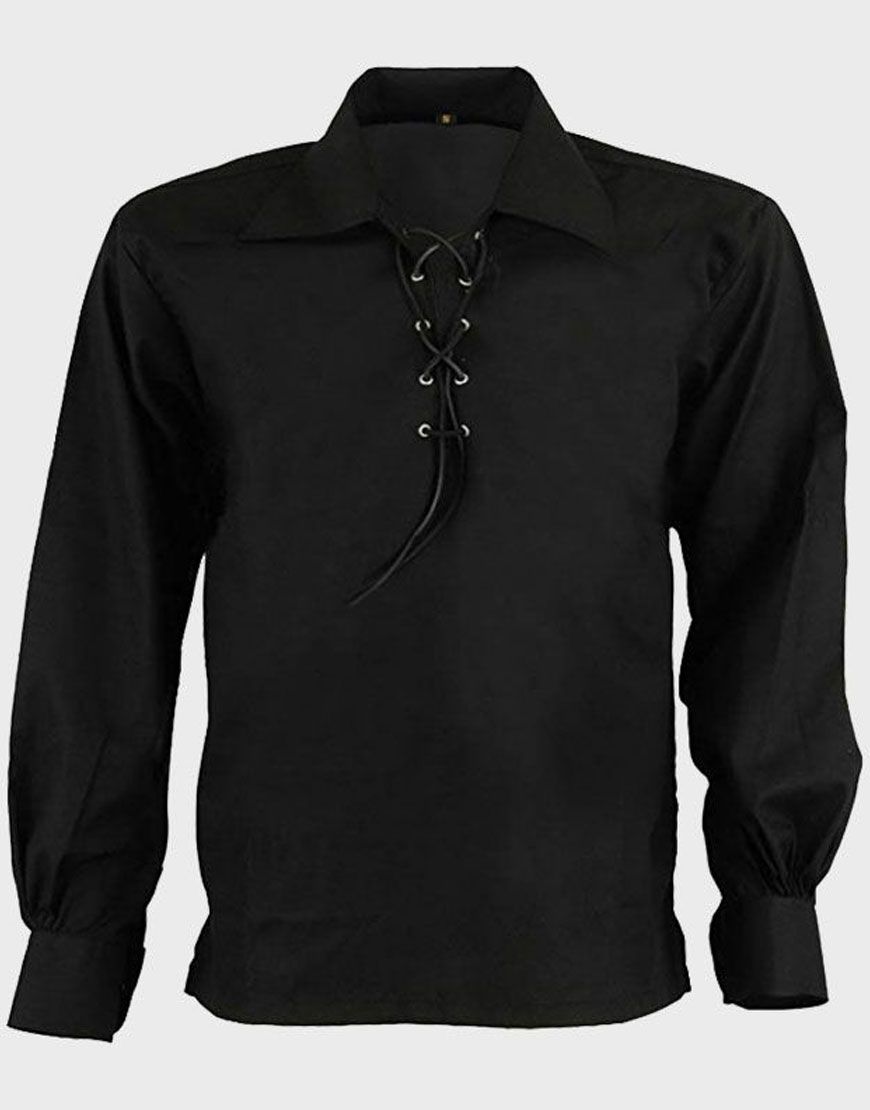
But think carefully before using the ghillie shirt for a highly formal wedding.
It belongs to a relaxed style of Highland clothing.
A formal jacket deserves a formal shirt.
Tie, Bow Tie, or Tartan Tie?
Neckwear should follow the jacket and time of day.
Prince Charlie is traditionally associated with formal evening styling and therefore commonly worn with a bow tie.
Argyll gives you considerably more freedom. A conventional necktie works particularly well for daytime weddings, while a bow tie can make the outfit smarter.
Tartan ties require a little care.
If the tie uses exactly the same tartan as the kilt, the effect can work nicely because the fabrics are separated by the jacket and waistcoat.
A completely different tartan immediately beside the main sett can become visually confusing.
When in doubt, choose a solid tie that picks up a quieter colour from the kilt.
You already have one strong pattern.
It does not need competition.
Kilt Hose and Flashes Are Small Details That Matter
The section between the kilt hem and the shoes occupies a surprisingly large part of the overall silhouette.
For weddings, cream or off-white kilt hose remain popular because they work with an enormous range of tartans.
Charcoal, navy, dark green, and other restrained colours can produce a more contemporary look.
Flashes sit near the top of the hose and help hold them in position. They are also an easy place to introduce a colour from the tartan without overwhelming the outfit.
If your sett contains a fine red stripe, for example, red-accented flashes can draw attention to a colour that might otherwise disappear from a distance.
Small coordination usually looks better than perfect colour matching everywhere.
What Shoes Complete a Scottish Wedding Outfit?
Traditional ghillie brogues remain one of the most recognisable choices.
Their long laces wrap around the lower leg and immediately reinforce the Highland character of the outfit. Kiltist's Brown Leather Ghillie Brogues can work particularly well with earthy tartans and lighter daytime outfits.
Black ghillie brogues are easier with formal black Prince Charlie dress.
Ordinary polished brogues are also perfectly reasonable and can sometimes produce a cleaner contemporary appearance.
For outdoor weddings, boots may be practical, particularly if the ceremony takes place on grass, rough ground, or an estate where guests will spend significant time outside.
Whatever you choose, wear the shoes before the wedding.
A groom should be thinking about the ceremony, photographs, family, and the person he has just married.
Not the blister developing on his left heel.
Do You Need a Kilt Belt and Buckle?
Not always.
This is one of those areas where people often assume more accessories automatically mean a more complete outfit.
A traditional kilt can be worn without a belt, particularly when a waistcoat is being used. The waistband and straps are already designed to secure the garment.
A belt becomes more useful in less formal outfits or when no waistcoat is worn.
If you do use one, keep the leather and hardware consistent with the rest of the outfit. A Black Plain Leather Kilt Belt With Buckle provides a straightforward traditional option without competing excessively with the sporran or jacket.
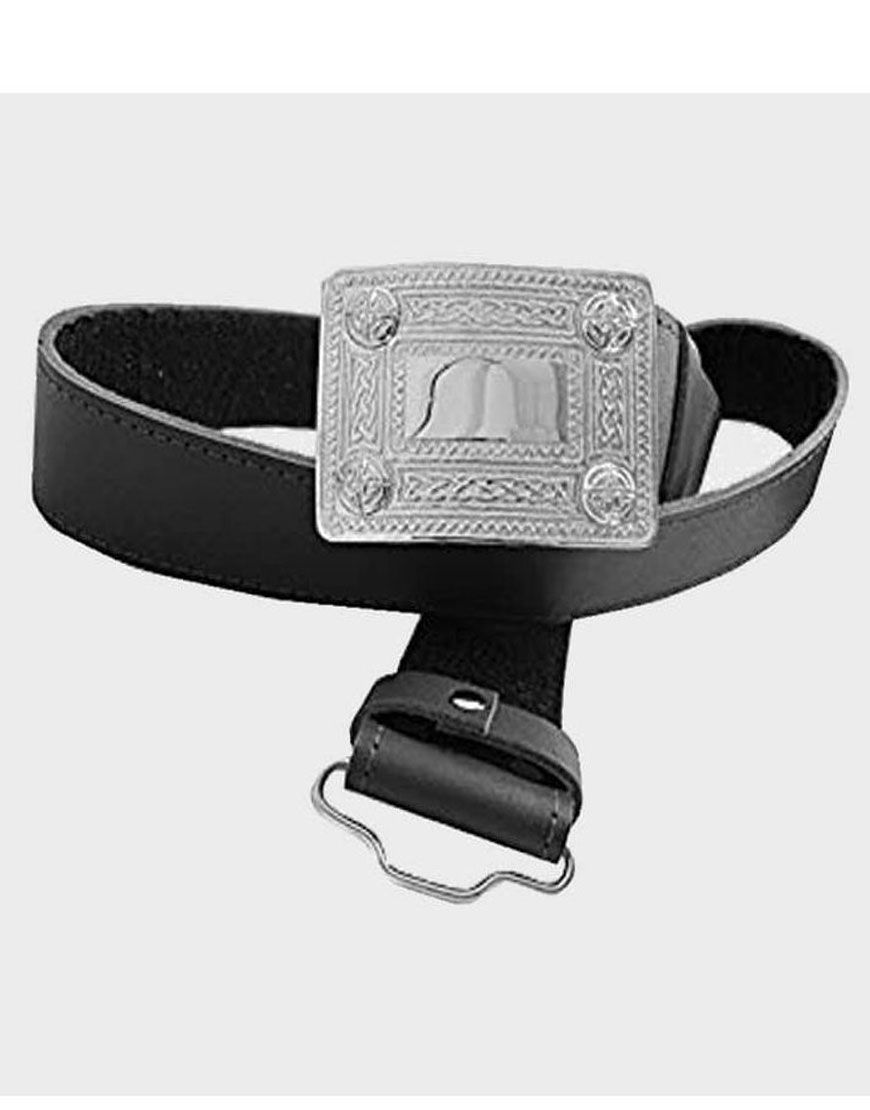
Do not force a belt beneath a waistcoat simply because it appeared on an accessory checklist.
Highland dress works through proportion, not accumulation.
What About the Sgian Dubh?
The sgian dubh is traditionally worn tucked into the top of the kilt hose, with the upper portion visible.
Historically, it belongs to Highland dress and remains a familiar ceremonial accessory.
Modern weddings, however, take place in venues with their own rules.
Before wearing one, check the venue policy and any applicable legal or security restrictions, particularly if the wedding takes place in a hotel, civic building, transport hub, or venue using security screening.
A decorative or non-bladed alternative may be preferable where restrictions apply.
No accessory is important enough to create unnecessary difficulty on the wedding day.
Should the Groom Wear a Fly Plaid?
A fly plaid can produce a striking formal silhouette.
It is generally worn over the shoulder and secured with a brooch, often using tartan matching the kilt.
For a groom in full formal Highland dress, it can help distinguish him from the wedding party and create impressive photographs.
But it is optional.
A groom wearing an Argyll jacket at a relaxed country wedding may look better without one.
Likewise, adding fly plaids to every groomsman can make the group visually heavy.
Use one because it suits the outfit, not because a Scottish wedding checklist says every available accessory must appear somewhere.
How to Coordinate the Kilt With the Bride or Partner
Matching does not mean reproducing the tartan everywhere.
If the tartan contains burgundy, the flowers might include a similar shade.
A green sett can work with botanical arrangements.
A navy-based tartan can connect naturally with suits worn by other members of the wedding party.
Small tartan details can also be introduced elsewhere through ties, pocket squares, ribbons, sashes, or flashes.
The key word is small.
Once the groom is already wearing several yards of tartan, the wedding does not need tartan tablecloths, tartan chair bows, tartan napkins, tartan invitations, and tartan everything else to prove that it is Scottish.
Let the kilt carry some of that responsibility.
Made-to-Measure Matters Most on the Wedding Day
There are occasions where an approximate fit may be acceptable.
Your wedding is probably not one of them.
The groom will be photographed from the front, side, and back. He will stand, sit, walk, dance, and perhaps kneel. The kilt needs to remain comfortable and maintain its shape throughout.
A Scottish Wedding Kilt Outfit made to measure is particularly useful when the goal is to coordinate the entire outfit around individual measurements rather than adapting an off-the-rack garment at the last minute.
Order early enough to allow for production, delivery, and a proper fitting before the wedding.
Do not schedule the first full try-on for the night before.
Ordering Kilts for a Whole Wedding Party
A group order requires more planning than buying one groom's outfit.
Every wearer needs individual measurements.
Do not assume that five men who usually buy medium trousers need five identical kilts.
Collect waist, hip, and kilt length measurements separately. If jackets and waistcoats are included, chest, shoulder, sleeve, and other measurements will also be required.
Keep a written measurement sheet for each person.
Label everything clearly.
Decide early whether the groomsmen will wear identical accessories or whether the groom will have distinguishing details.
Most importantly, leave time.
Custom tartan weaving, made-to-measure production, international shipping, and last-minute alterations can all add to the schedule.
Wedding clothing is one area where ordering early rarely causes regret.
Think About the Ceilidh Before Choosing the Outfit
A Highland wedding outfit has to survive more than the ceremony.
By evening, jackets come off.
Waistcoats loosen.
The dance floor fills.
This is when a properly fitted kilt proves its worth.
The waistband should remain secure without restricting movement. Pleats should move freely. Hose should stay in place. Shoes need to be comfortable enough for dancing.
If you expect a serious ceilidh, think about this during the fitting.
The most beautiful wedding outfit in the photographs is not much use if the groom wants to change out of it before the first dance.
Traditional Highland clothing should be wearable.
That has always been part of its appeal.
Three Reliable Scottish Wedding Directions
For a formal evening wedding, choose a traditional tartan kilt, Prince Charlie jacket and waistcoat, white dress shirt, bow tie, dress sporran, cream hose, flashes, and polished ghillie brogues.
For a daytime or country wedding, combine a tartan kilt with an Argyll jacket, waistcoat if desired, plain shirt, necktie, semi-dress sporran, hose, and brogues.
For a relaxed outdoor ceremony, let the kilt carry most of the tradition. Add a plain shirt, day sporran, hose, and sturdy leather footwear, with a tweed or wool layer available if the weather turns.
All three are recognisably Scottish.
The difference is formality, not authenticity.
Buy the Kilt for the Marriage, Not Just the Wedding
The best wedding clothes have an afterlife.
A well-made tartan kilt can return for anniversaries, Burns suppers, family weddings, Highland Games, formal dinners, ceilidhs, St Andrew's Day, and countless other occasions.
Years later, the tartan may still represent the same clan or district.
But the garment will represent something else as well.
Your wedding.
That personal history is difficult to reproduce with clothing hired for a weekend and returned on Monday morning.
If the budget allows, this is one of the strongest arguments for buying the groom's kilt even when other members of the wedding party hire or choose less expensive options.
The wedding gives the kilt its first story.
It should have time to collect more.
Final Thoughts
Choosing Scottish wedding attire becomes much easier once you stop asking what a groom is "supposed" to wear and start asking what suits the wedding.
Begin with the tartan.
Use a genuine family connection if you have one. If you do not, choose a district, universal, military, or other appropriate sett without inventing ancestry.
Get the measurements right.
Then establish the level of formality. Prince Charlie works beautifully for formal Highland evening dress. Argyll offers greater flexibility for daytime ceremonies and weddings that move between formal and relaxed settings.
Choose the sporran, shirt, neckwear, hose, flashes, and footwear to support that decision rather than competing with it.
Most importantly, remember that the kilt is clothing.
You should be able to stand at the ceremony, sit through dinner, walk through photographs, and dance long after the formalities are finished.
Choose well and the kilt will do something few wedding outfits manage.
It will look right on the big day and still mean something decades after it.