
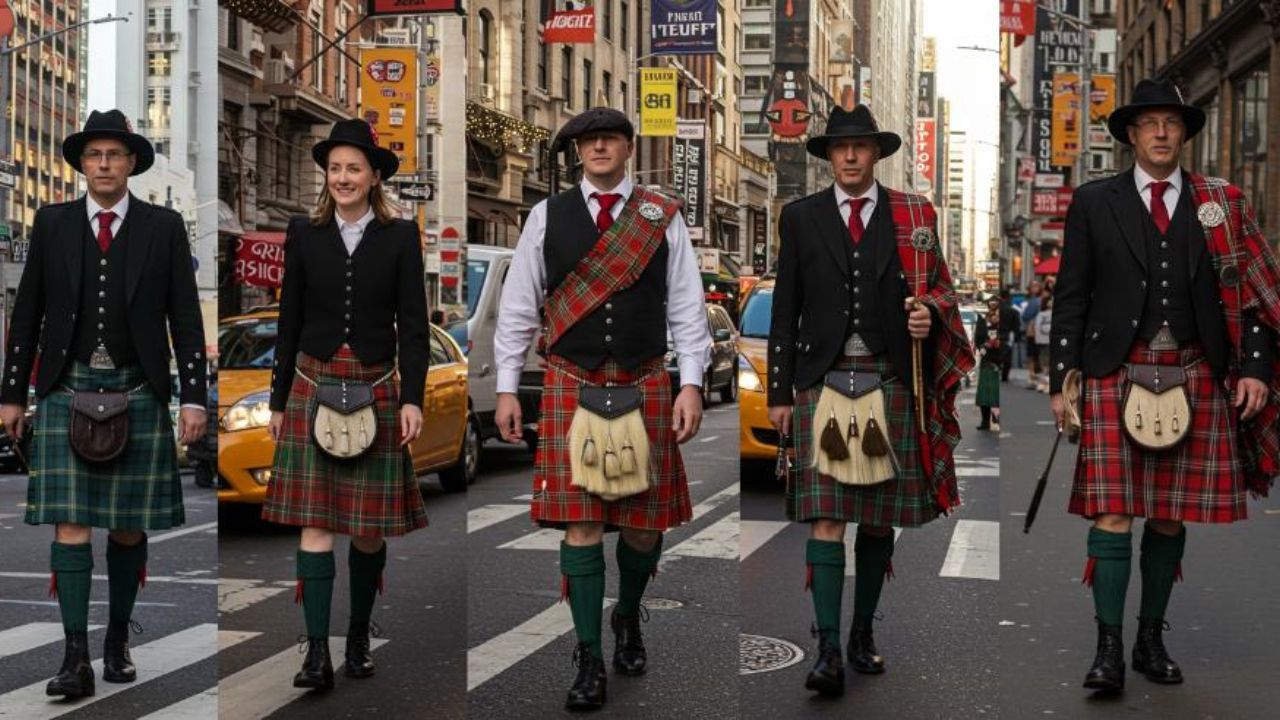
Wigtown Shows That Scottish Dress Does Not Need a Highland Games Field
A man in a tartan kilt steps out of a second-hand bookshop carrying two paperbacks and a hardback he had no intention of buying. Across the street, people are heading towards an author talk. Someone is drinking coffee on the square. Another visitor is checking the programme before deciding whether there is enough time to squeeze in one more bookshop.
Nothing about the scene resembles a Highland Games.
And yet the kilt does not look out of place.
That is one of the pleasures of Wigtown Book Festival. Scotland's National Book Town provides a setting where Scottish identity is expressed through books, language, history, landscape, debate and storytelling rather than through the familiar combination of pipes and athletics.
Wigtown was officially designated Scotland's National Book Town in 1998. Its annual festival has since grown into a major cultural event, with the 2026 edition running from 25 September to 4 October and bringing more than 250 events to a town whose permanent population is only around a thousand.
So why wear a kilt here?
Because the kilt was never destined to remain confined to Highland Games, weddings and ceremonial occasions. Its survival depends partly on people continuing to wear it in places where contemporary Scottish life actually happens.
A book festival is one of them.
Wigtown and the Kilt Have Something Unexpected in Common
Both survived because people found new uses for old traditions
Wigtown's modern literary identity came from necessity.
During the 1990s, the former county town was struggling economically. Empty properties and unemployment had become serious problems, and the community needed something capable of bringing people and investment back.
The answer was books.
Wigtown competed against several other Scottish towns for designation as Scotland's National Book Town and won. The announcement came on 16 May 1998. Booksellers arrived, properties found new purposes, visitors followed, and the festival developed as another part of the town's regeneration.
Today, Wigtown has seventeen bookshops and book-related businesses.
The interesting part of the story is that the town did not preserve books by treating them as historical objects.
People bought them.
Sold them.
Read them.
Discussed them.
Built businesses around them.
The kilt has survived through much the same principle.
Traditional clothing remains culturally meaningful when people wear it. A traditional tartan kilt does not need to spend eleven months of the year waiting for Burns Night.
It can go to Wigtown.
 Graham of Menteith Modern Tartan kilt - kiltistSpecial Price $199.00 Regular Price $314.00
 Men's Traditional Falkirk Tartan KiltSpecial Price $310.00 Regular Price $515.00


The Kilt's History Is Broader Than the Modern Highland Outfit
The kilt we recognise today is the product of a long development in Highland clothing.
Earlier Highland dress included the large belted plaid, often called the féileadh mòr. Over time, the smaller kilt became established, while military use and later nineteenth-century enthusiasm for Highland culture helped give tartan dress a much wider public identity.
The history is considerably messier than the popular story that every Scottish clan has worn one fixed tartan since ancient times.
Tartan itself has deep roots, but the familiar system linking named patterns closely with particular clans became much more organised during the late eighteenth and nineteenth centuries.
By then, tartan was also becoming something larger than regional clothing.
It could express military identity.
Family association.
Place.
Political sentiment.
Romantic ideas of Scotland.
Eventually, national identity.
That wider history explains why the modern kilt can move comfortably beyond explicitly Highland events.
Its origins may be Highland, but its cultural life became Scottish.
Wigtown Is Scottish Without Performing a Stereotype
That makes Scotland's National Book Town particularly interesting.
Wigtown lies in Dumfries and Galloway, not the Highlands.
There is no reason to disguise that geographical distinction. In fact, acknowledging it produces a more accurate picture of Scottish culture.
Scotland contains Highland, Lowland, island and border traditions. Gaelic exists alongside Scots and Scottish English. Fishing communities, industrial cities, agricultural districts and remote glens all contributed to the country's identity.
Literature captures those differences particularly well.
A festival built around books can move from rural memoir to contemporary Glasgow, from Scottish history to international politics, from nature writing to poetry within a single afternoon.
Tartan has acquired similar freedom.
Wearing a kilt at Wigtown does not mean pretending the town is Highland.
It means wearing a piece of Scottish clothing within another Scottish cultural tradition.
That distinction is small but important.
Your Kilt Does Not Need to Become a Costume
Wigtown rewards ordinary clothing with character
If you wore full ceremonial Highland dress to an ordinary afternoon author talk, you might spend more time managing the outfit than enjoying the discussion.
Wigtown calls for something simpler.
Start with the kilt.
Add a plain shirt, knitwear, leather sporran and comfortable shoes or boots.
Stop there if it works.
That simplicity is one of the reasons darker tartans are particularly effective for the festival. Navy, forest green, charcoal, burgundy and subdued blues sit comfortably beside the colours of ordinary autumn clothing.
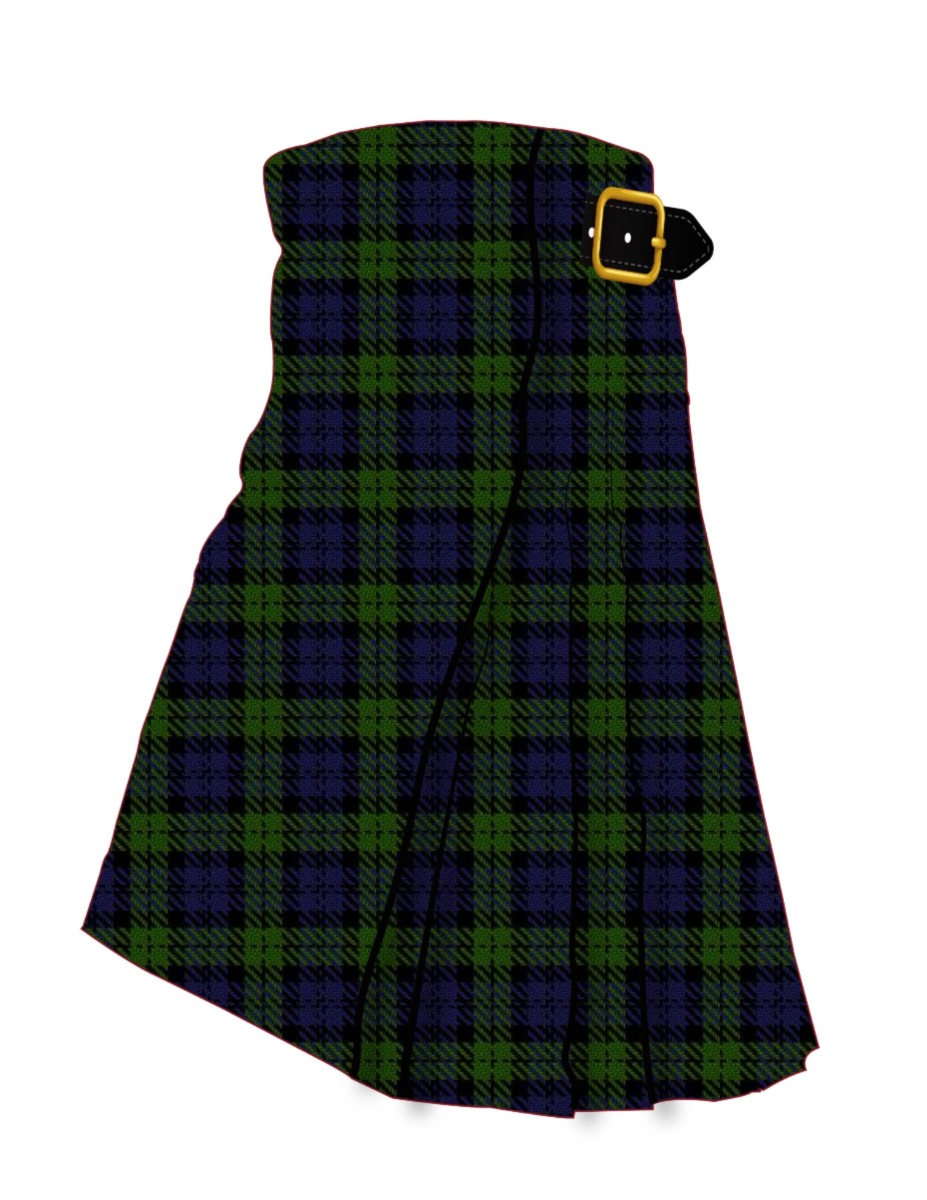
A Black Watch Smallest Sett Tartan Kilt, for example, works particularly well because its dark green and blue can almost function as neutrals. It can be worn with a cream knit one day and a smarter jacket the next without requiring the rest of the wardrobe to become Highland dress.
The tartan provides the Scottish character.
Everything else can relax.
A Clan Tartan Can Turn Books Into a Family Conversation
Literary festivals have a habit of sending people down unexpected paths.
You attend a talk about migration and begin thinking about your grandparents.
You buy a local history because a family name appears in the index.
A discussion of place makes you wonder exactly where an ancestor lived.
For visitors with Scottish ancestry, tartan can become part of the same curiosity.
If you have a documented association with a clan, wearing its tartan can make Wigtown particularly personal. But the important word is documented.
A matching surname is a starting point, not proof.
Scottish family histories can involve branches, sept associations, geographic movement and unrelated families sharing similar names. Clan tartans themselves were often formalised considerably later than popular mythology suggests.
Research first.
If the connection survives scrutiny, the tartan gains more meaning.
If it does not, you have learned something useful anyway.
No Scottish Ancestry? You Can Still Wear a Kilt
This question comes up constantly around Scottish dress.
The answer is straightforward.
You do not need Scottish ancestry to wear a kilt respectfully.
Not every tartan represents a clan. District, military, universal, organisational and commemorative tartans all exist, while many modern wearers simply select a sett whose history or colours they appreciate.
Browse a collection of kilts for men and the variety quickly becomes apparent.

 Black Cotton Utility Kilt with Leather StrapsSpecial Price $70.00 Regular Price $120.00


 Gordon Red ancient Tartan kilt - KiltistSpecial Price $149.00 Regular Price $314.00


The sensible approach is not to invent a connection.
If you have no MacDonald ancestry, you do not need to create some.
Choose an appropriate tartan, learn what it represents and wear it as clothing rather than as a claim about who your ancestors were.
At an event devoted to books and ideas, intellectual honesty seems a particularly good dress code.
Autumn Is One of the Best Seasons for Wearing Tartan
Wigtown falls at exactly the right time
The 2026 Wigtown Book Festival runs from late September into early October.
That gives the kilt an advantage.
Tartan looks particularly natural beside autumn fabrics.
Wool.
Tweed.
Leather.
Knitted cotton.
Heavy shirts.
Weatherproof outerwear.
A dark tartan kilt with a cream crew-neck sweater and brown leather boots can look almost effortless. Replace the sweater with a tweed jacket and the same kilt becomes considerably smarter.
Add a waterproof coat when necessary.
There is no contradiction between traditional clothing and practical outerwear. Scotland's weather has never been particularly respectful of carefully planned outfits.
Tweed and Tartan Belong Together, but Be Careful
Wigtown makes tweed tempting.
Old bookshops, stone buildings, autumn weather and shelves of Scottish literature practically invite it.
A tweed jacket can look excellent with a kilt because the two fabrics create interest differently. Tartan uses intersecting lines and colour blocks, while tweed can introduce texture and subtle variation.
The combination goes wrong when both compete for attention.
A colourful tartan needs a quiet jacket.
A restrained tartan gives you more freedom.
Avoid placing a large checked tweed directly above a large tartan sett unless you are very confident about the combination.
Scottish clothing does not become more Scottish with every additional pattern.
Sometimes grey tweed over dark Black Watch is all you need.
What Shirt Works for a Day Among Books?
A white Oxford shirt remains the safest answer.
Cream, pale blue, navy and charcoal can work just as well depending on the tartan.
If you want something more obviously connected with Highland clothing, a ghillie shirt gives the outfit a relaxed Scottish character without pushing it towards evening formality.
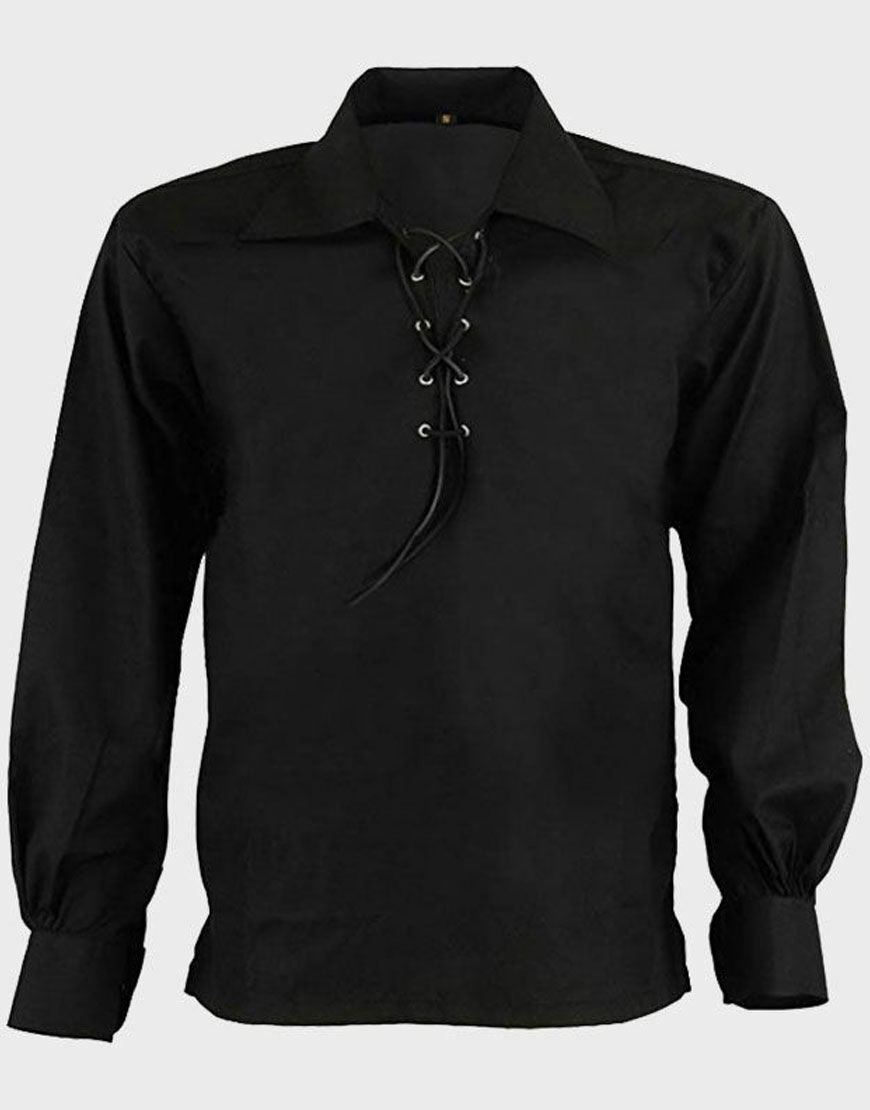
But Wigtown also gives you permission to ignore Highland convention above the waist.
Wear a knit.
Wear a cardigan.
Wear a simple wool overshirt.
The goal is not to assemble a complete set of traditional accessories.
It is to make the kilt feel like something you actually own and wear.
The Sporran Works Brilliantly Until You Find the Bookshops
Traditional kilts do not provide ordinary trouser pockets, so the sporran remains genuinely useful.
For Wigtown, choose a day sporran rather than an ornate dress design.


Leather works especially well with an autumn outfit. It gives you enough room for a phone, wallet, keys and other essentials while maintaining the proportions of traditional Highland dress.
Unfortunately, Scottish tradition failed to anticipate the second-hand bookshop.
A sporran will hold your phone.
It will not hold the biography you bought after the morning talk, the out-of-print novel you found twenty minutes later and the local history you absolutely did not need but bought anyway.
Bring a tote.
At Wigtown, it may be the most useful accessory you own.
Comfortable Shoes Matter More Than Traditional Shoes
Wigtown is compact enough to explore on foot, but festival days involve more walking than people expect.
You leave one event.
Cross town for another.
Stop at a shop.
Realise the next talk is somewhere else.
Return for coffee.
Find another bookshop.
Repeat.
Ghillie brogues are perfectly suitable if they are already comfortable. Kiltist's Brown Leather Ghillie Brogues can complete a more recognisably traditional Highland outfit.
But ordinary brogues and leather boots work equally well.
In wet autumn weather, boots may be the sensible choice.
Do not sacrifice an entire day's comfort because you believe a kilt requires one particular shoe.
It does not.
An Argyll Jacket Can Take You Into the Evening
Wigtown changes character after the daytime talks finish.
Dinner, performances, social events and evening sessions can justify something smarter than the sweater you wore while browsing bookshops.
An Argyll jacket works particularly well because it occupies the useful space between casual clothing and formal Highland evening dress.
A Black Argyll Men's Scottish Kilt Outfit provides the darker, classic approach. A Light Grey Argyll Jacket Kilt Outfit Package offers a softer contrast with many darker tartans.
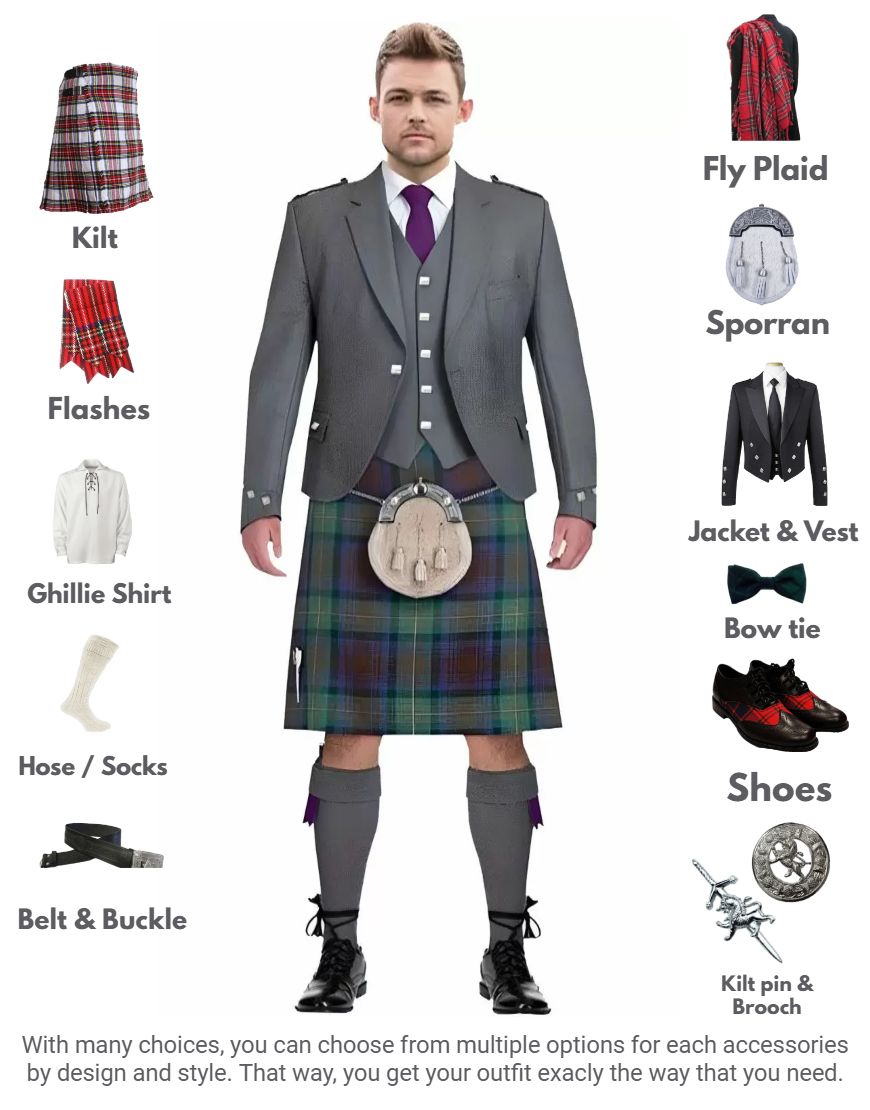
You do not necessarily need the complete outfit for Wigtown.
The useful lesson is the level of formality.
Argyll can move between day and evening.
Prince Charlie dress usually signals something more formal.
For most literary-festival plans, the former is easier.
The Ceilidh Changes the Equation
Wigtown Book Festival is not entirely about sitting quietly while someone discusses a new novel.
Its wider programme has included music, performance, walks, family events and a festival ceilidh.
Suddenly, wearing a kilt makes even more sense.
A well-fitted traditional kilt allows plenty of movement, which is exactly what you discover once a ceilidh begins and remaining politely seated stops being an option.
This is also where fit becomes more than a visual concern.
The waistband needs to sit securely.
The hip measurement needs enough room.
Pleats should move freely rather than being pulled tight across the seat.
The length should remain around the middle of the knee.
A properly made kilt should be clothing you can move in.
If you are afraid to move because something might shift, the problem is probably the fit rather than the tradition.
Literature Has Helped Create the Scotland We Imagine
There is a deeper reason tartan belongs comfortably beside books.
Much of the world's idea of Scotland was shaped through writing.
Robert Burns helped preserve and transform Scots song and poetry.
Sir Walter Scott's novels had an enormous influence on nineteenth-century perceptions of Scottish history, particularly the Highlands.
Robert Louis Stevenson carried Scottish voices, landscapes and conflicts into literature read around the world.
Later writers complicated those images.
Hugh MacDiarmid challenged ideas about Scottish language and culture. Nan Shepherd wrote about the Cairngorms with an intimacy quite different from romantic Highland spectacle. Muriel Spark's Scotland was intellectual, sharp and often urban. Alasdair Gray turned Glasgow into something simultaneously local and universal.
Contemporary Scottish literature continues arguing with everything that came before it.
That matters because cultural identity is never simply inherited.
It is continually rewritten.
Tartan has undergone much the same process.
A Kilt Can Say Something Without Claiming Too Much
Clothing communicates.
At Wigtown, that communication can remain quiet.
A family tartan might say something about ancestry.
A district tartan might express attachment to a place.
A military tartan can carry historical associations.
A universal sett may simply say that the wearer appreciates Scottish clothing.
None requires an elaborate performance.
This is perhaps why the kilt works so well at a literary festival.
Books teach us that identity is complicated.
The best characters are rarely reducible to one label.
Real people are even less so.
You can wear a Scottish garment without making Scottishness your entire personality for the day.
Do Not Dress Like a Historical Illustration
There is always a temptation with traditional clothing to keep adding things.
A bonnet.
A fly plaid.
A brooch.
A large dress sporran.
A clan badge.
Perhaps something involving feathers.
For an ordinary day at Wigtown, resist.
Those pieces have contexts of their own.
Some belong to formal Highland dress. Others have military, ceremonial or organisational associations. Combining everything that looks vaguely Scottish does not produce a more authentic outfit.
It produces costume.
A kilt, plain knit, day sporran and boots can communicate far more confidence.
The garment has enough history already.
You do not need to decorate it with additional proof.
The Best Wigtown Kilt Is One You Will Wear Somewhere Else
If you buy a kilt specifically for the festival, think beyond October.
Would you wear it at Burns Night?
A wedding?
Another Scottish festival?
A Highland Gathering?
A ceilidh?
Dinner?
Perhaps simply out again with knitwear and boots?
If the answer is yes, you have probably chosen well.
A traditional kilt becomes more interesting through use. The first time you wear it, the tartan carries whatever history already belongs to the pattern.
Later, it begins collecting yours.
Wigtown might become the place where you first wore it.
A wedding might come next.
Years later, the same kilt can carry associations with people, places and occasions that had nothing to do with the original purchase.
Clothing acquires memory surprisingly quickly.
Wigtown Is Exactly Where Living Tradition Should Be
Scotland's National Book Town is built around an old technology that supposedly keeps dying.
The printed book has survived radio, television, computers, smartphones, social media and countless predictions of its disappearance.
Wigtown fills entire shops with them.
The kilt has survived its own changes in fashion and politics.
Both remain because people continue finding reasons to use them.
That is why the question is not really whether kilts still belong at Wigtown.
The better question is why we would confine them elsewhere.
Traditional dress becomes culturally weak when it can exist only at ceremonies organised specifically to preserve it.
It becomes culturally strong when someone can wear it to hear a novelist speak, buy an old book, drink coffee, walk through a Scottish town and dance at a ceilidh later that evening.
Nothing needs to be reenacted.
The tradition is simply being used.
Final Thoughts
Wigtown does not need cabers, massed pipe bands or a Highland arena to make a kilt appropriate.
Its Scottishness comes from somewhere else.
It comes from place, language, books, local history and a community that rebuilt part of its future around culture. Since becoming Scotland's National Book Town in 1998, Wigtown has developed a permanent literary identity and an annual festival capable of bringing hundreds of events into one small Dumfries and Galloway town.
A kilt belongs there because Scottish dress is part of the same living culture.
Choose a tartan with a genuine family connection if you have one. If you do not, choose a district, universal or other established tartan whose story you appreciate.
Wear it with a shirt or knit.
Carry your essentials in a day sporran.
Wear shoes capable of surviving hours among the bookshops.
Bring something waterproof.
And leave enough room in the bag for whatever you inevitably buy.
The kilt does not need a Highland Games field to remain Scottish.
Sometimes a street full of books is more than enough.